
When it comes to construction, storage or temporary infrastructure, the choice of container plays a key role. There are three options most often considered in the market today - folding, modular and standard. To get it right select a container, It's important to understand how they differ and where each type works best.
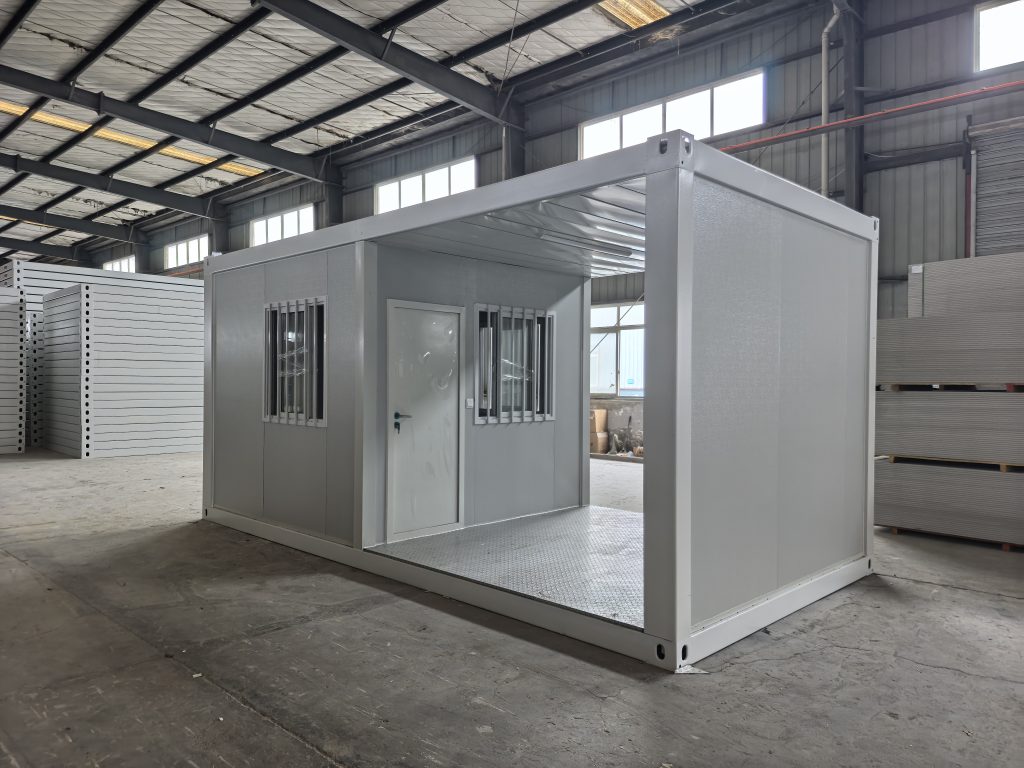
Folding models are convenient because they can be quickly assembled and disassembled. When folded, they take up a minimum of space, which makes transportation and storage very easy.
They are most often used:
The main plus is savings on delivery and quick installation. Minus - limited durability compared to capital solutions.
Modular constructions are a more serious option. They can be combined, interconnected and expanded as required.
They are suitable for:
Such solutions are often offered by factories operating under the OEM model, where it is possible to customize the project to meet specific requirements. For example, Chinese manufacturers produce modular systems with full customization of layout and insulation (camomodule.en.made-in-china.com.)
These are classic metal containers used in logistics and construction. They are sturdy, withstand transportation well and are suitable for long-term storage.
They are chosen when they are important:
The minus is the lack of flexibility and limited upgrade options.
First, it's important to understand what the container is for: a warehouse, an office, or temporary housing.
If the facility is outdoors, it is better to choose reinforced or modular solutions.
Folding is cheaper logistically, modular is more profitable in the long run, and standard is a versatile option.
A reliable supplier always offers technical specifications, certificates and real projects.
Pros: mobility, space saving
Cons: limited durability
Pros: flexibility, extensibility
Cons: higher cost
Pros: reliability, versatility
Cons: no adaptability
In order to select a container, It is important not to chase a one-size-fits-all solution. Folding units are suitable for temporary tasks, modular units for project development, and standard units for durable and stable solutions.
If you evaluate the tasks and operating conditions in advance, you can choose an option that will really save your budget and simplify your work in the future.
 Phone:+86 13551309988
 Mailbox:cnsiteoffice@yandex.ru
 Address:Yang'an Industrial Park, Qionglai Town, Chengdu City, Chengdu, Sichuan Province, 16 Henliu St.


